What is in Your Hands?
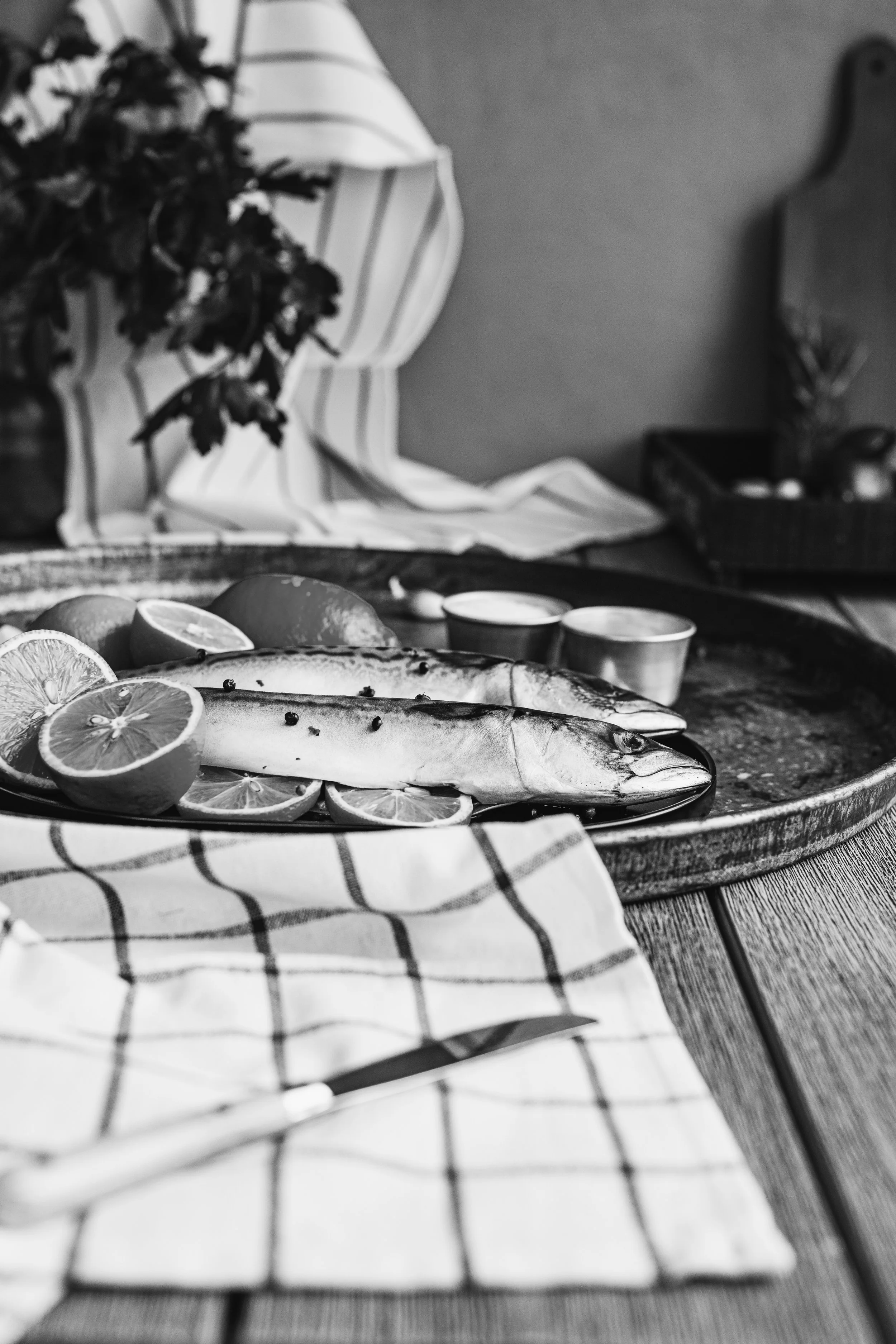
There are some stories in Scripture that we think we know so well that we stop seeing them. We have heard the story of Jesus feeding the five thousand so many times that we can almost anticipate every line. Five loaves. Two fish. Thousands of hungry people. A miracle.
But what if we have been looking at the wrong part of the story?
What if the miracle does not begin with the bread?
What if the miracle begins with compassion?
We have just come through ten Sundays of practicing attunement to the Holy Spirit, practicing alignment with love, remembering who we truly are as people made in the image of Christ. And now we come to these stories of Jesus healing, feeding, restoring, and revealing what the kingdom of God looks like when it becomes visible among us.
This is one of my favorite things about Jesus: when we look at Jesus, we see God. Jesus is the perfect image of the invisible God. So when we see Jesus moved by compassion, we learn something about God.
Jesus has just received devastating news. His cousin John has been murdered by Herod Antipas. John was someone Jesus loved, someone who had followed the way of God and spoken against the violence and oppression of empire. Jesus hears that John has been killed, and he gets into a boat and goes somewhere remote to be alone.
I understand that.
Sometimes grief makes us want to disappear for a little while. Sometimes we need a quiet place where we can breathe, pray, sleep, cry, or simply be. Jesus wanted to be alone with his grief.
But the crowds followed him.
And when Jesus stepped out of the boat and saw them, the Scripture says that he had compassion on them.
That little sentence tells us so much.
Jesus' plans were interrupted. His solitude was interrupted. His grief was interrupted. And when he saw people who were suffering, he was moved toward them.
Compassion means to suffer with. It means allowing another person's pain to matter to us.
And I wonder: When was the last time you allowed compassion to move you?
So often we are moved by something else. We live on autopilot. We get up, go to work, accomplish what needs to be accomplished, come home, do it again. We have learned how to move through the world without really seeing the people around us.
But Jesus sees.
And when Jesus sees suffering, he does something about it.
He heals them.
This is important. Jesus is deeply concerned with healing. Love is concerned with healing. God is concerned with healing. The ministry of Jesus is full of people whose bodies, hearts, lives, and communities are being restored.
And then Jesus turns to his disciples and says something that I think we sometimes wish he had not said.
The disciples look at the crowds and say, essentially, “It's getting late. Send them away. Let them go find food for themselves.”
In other words: Let them fend for themselves.
We have heard this language before.
Let the poor figure it out. Let the sick figure it out. Let people solve their own problems. Let them pull themselves up by their bootstraps. We have enough to worry about.
And Jesus says, No. You feed them.
Beloved, this is the way of the kingdom.
Jesus does not say, “Don't worry about them. God will take care of it.”
Jesus says, “You feed them.”
The kingdom comes when ordinary people become responsible for one another. It comes when compassion moves us out of ourselves and toward the suffering of another person.
And immediately the disciples respond with the most reasonable objection in the world:
“But we only have five loaves and two fish.”
Of course you do.
Of course what you have does not seem like enough.
How often do we look at the suffering of the world and say, “I don't have enough. I can't fix this. What difference could I possibly make?”
But Jesus is not asking you to solve the whole world.
He is asking you to look at what is in your hands.
What is in your hands?
Maybe it is five loaves and two fish.
Maybe it is a gift you have been given.
Maybe it is a little extra money.
Maybe it is your ability to listen.
Maybe it is a meal you can make.
Maybe it is a room at your table.
Maybe it is your capacity to notice someone who has been overlooked.
Maybe it is a word of encouragement.
Maybe it is simply your presence.
And sometimes, beloved, what is in your hands is your own pain.
You can put that in the hands of Jesus, too.
The miracle begins when we stop waiting for what we don't have and offer what we do have to Jesus.
“Bring them here,” Jesus says.
Bring what you have.
Put it into the hands of love.
And then something happens.
Jesus blesses it.
I love that part of the story because when we find ourselves in scarcity, we tend to panic. We curse what we have because it doesn't seem like enough.
Jesus blesses it.
What if we learned to bless what we have?
What if instead of saying, “This isn't enough,” we said, “Jesus, this is what I have. Take it.”
And then the disciples begin to distribute it.
This is another important part of the miracle. Someone gives something, and then someone else gives it away.
The miracle happens in the sharing.
The bread moves from hand to hand.
And suddenly there is enough.
Not just enough for a bite.
Not just enough to survive.
Everyone eats until they are full.
And there are leftovers.
Twelve baskets of leftovers.
Enough for everyone.
Even the way Matthew tells the story matters. The text counts five thousand men and then tells us there were women and children there, too. I reject the idea that the only people worth counting were the men.
There were women there.
There were children there.
There were hungry people there.
And Jesus saw them.
Their hunger mattered to him.
Their bodies mattered to him.
Their lives mattered to him.
This is the Jesus we follow.
And this is why I want us to ask a different question when we read this story. Not simply, “How did Jesus multiply the bread?”
But:
Where is Jesus asking me to participate in the miracle?
Because we are not spectators in the kingdom of God.
We are participants.
Jesus teaches us to pray, “Give us this day our daily bread.” And daily bread does not simply mean asking God to drop food from heaven. Daily bread looks like sharing the bread that is already in our hands.
One of the ancient teachings says it beautifully: Pray for the world to be fed, and then feed them.
Pray—and then do something.
Pray for peace—and become a person of peace.
Pray for the marginalized—and widen your table.
Pray for the hungry—and feed someone.
Pray for healing—and become part of the healing.
This is where our theology has to become real.
If our theology does not meet the suffering around us, then perhaps we need a better theology.
Jesus shows us the way.
And the way of Jesus is not scarcity. It is abundance.
We have been taught to believe that if we give something away, we will have less.
But Jesus keeps showing us something different.
There is enough.
There is enough love.
There is enough mercy.
There is enough grace.
There is enough courage.
There is enough bread.
The question is whether we are willing to place what we have into the hands of Jesus and then pass it around.
This is also why we come to the communion table.
We come to remember.
And to remember in the biblical sense is more than thinking about something that happened in the past. It is to bring the past into the present. It is to embody again the way of Jesus.
At this table, we eat with people who do not vote like us.
We eat with people who have hurt us.
We eat with people we have hurt.
We eat with people who need our patience.
We eat with people who have been patient with us.
The table keeps widening.
And that is the invitation of Jesus: widen your table.
I think about my grandmother when I think about this.
After church, our family often had people over to eat. My grandmother would make a huge pot of something delicious, food that nourished and also went a long way. But one day, more people showed up than she had anticipated. There wasn't enough room.
There wasn't even enough table.
So my grandmother looked at my mother and said, “Take the door off the hinges and make a table.”
And that's what she did.
My mom took the door off the hinges, put legs underneath it, threw a tablecloth over it, and made a bigger table.
I have never forgotten that.
Sometimes the work of the kingdom looks like taking the door off the hinges.
Sometimes we have to dismantle the things that were designed to keep people out.
Sometimes we have to stop asking, “Do we have room for them?” and start asking, “How can we make more room?”
Because there is a feast of love being prepared.
And there is room at the table.
There is room for you.
There is room for the person you thought did not belong.
There is room for the person you have been taught to fear.
There is room for the person who is hungry.
There is room for the person who is lonely.
There is room for the person whose story makes you uncomfortable.
There is room because the love of God is not scarce.
And here is where this becomes deeply personal.
Jesus tells us that when we give, we should not do it for recognition. We don't need a parade. We don't need everyone to know how generous we are. We give because we are beloved.
I learned this lesson from my two year old son Silas.
Early morning on the floor playing in the sunbeam with his toys. Walking towards the kitchen I gave him some instructions and then said, “And remember, God is watching.”
I had inherited that language.
God is watching.
God is watching.
God is watching.
For so many of us, those words were meant to create fear.
But my darling boy, still playing with his toys, preached the gospel back to me.
He said, “Yes. Because I am dearly loved.”
Beloved, that is why we give.
Not because we are afraid God is watching.
We give because God is watching us with delight.
We give because we are dearly loved.
We give because love has already been given to us.
And when we know that, scarcity begins to lose its power.
We no longer have to clutch everything in our hands.
We can open them.
We can share.
We can feed.
We can welcome.
We can become miracle workers—not because we possess some extraordinary power, but because we are willing to participate in the extraordinary love of Jesus. So I want you to use your holy imagination. Imagine the kingdom of God. Are there hungry children there? No. Is there war there? No. Is anyone excluded from the table? No. Then this is the work in front of us.
Jesus teaches us to pray, “Your kingdom come, your will be done, on earth as it is in heaven.”
And then Jesus says, You participate in bringing it.
This is how the world changes.
Not because one person does everything.
Not because we save the world by ourselves.
But because we become a community that follows Jesus.
A community that notices suffering.
A community that responds with compassion.
A community that feeds.
A community that heals.
A community that widens the table.
A community that believes there can be enough.
So beloved, look at your hands.
What has been placed there?
What are you holding?
What can you offer?
And what would happen if you stopped asking whether it was enough and simply placed it into the hands of Jesus?
Because the miracle is not merely that Jesus can multiply bread.
The miracle is that Jesus can take ordinary people, ordinary gifts, ordinary generosity, ordinary acts of compassion—and make them part of the healing of the world.
This is the invitation.
You feed them.
You make the table bigger.
You take the door off the hinges.
You bring what you have.
You bless it.
You share it.
And then you watch for the miracle.
Because beloved, the God we know in Jesus is not a God of scarcity.
God is love.
And love, when it is released into the world, has a way of becoming more.
May we become people with open hands.
May our prayers become bread.
May our faith become generosity.
May our compassion become action.
May our tables become wider.
And may the love of Christ fill us until we overflow—not only for ourselves, but for the healing of the whole world.